


Nebraska's Non-Partisan Unicameral
15-minute read
Seal of the Nebraska Legislature
Public Domain Image | Wikimedia Commons
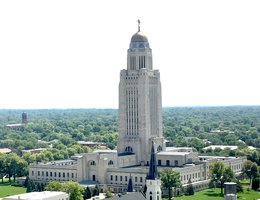
Aerial View of the Nebraska State Capitol Building
Photo by Capitolist | Wikimedia Commons
Introduction
Nebraska is unique in the United States as the only state with a unicameral legislature. Nebraska’s is also the only non-partisan legislature in the country. The Unicameral is the product of a movement to make the state’s government more open, accountable, and effective, and was created through the combined work of Progressive leaders and ordinary Nebraskans. Since 1937, this singular institution has provided Nebraskans transparency in lawmaking and the ability to hold lawmakers responsible for serving the public interest.
Today, Nebraska is the only state with a unicameral legislature. From the 2017 NET series, Nebraska 150 History Moments.
Bicameralism in the United States
When the United States Constitution was ratified in June of 1788, the people established a democratic republic, or a government in which some citizens vote to choose the people who will govern on their behalf. This government was the product of long and difficult debates over questions that civilizations have considered for thousands of years:
- Who should decide what the laws are?
- How should they decide?
- What and who are laws even for?
How we answer these questions about the design and philosophy of government helps us to decide the shape and character of our political worlds. The institutions and processes that we build into our governments affect how many laws get made, how quickly, and whose needs and interests those laws serve.
The law-making part of the United States government, or legislature, is outlined in Article I of the Constitution and is called the Congress. It is a bicameral legislature, which means it is made up of two separate assemblies of lawmakers, called “chambers” or “houses,” that both take part in lawmaking. Like other former colonies, the United States adapted this model from the British Parliament, which has been bicameral since the fourteenth century (1341).
The Congress is made up of a House of Representatives designed to represent the people, and a Senate designed to represent the states. This design is a compromise to a major disagreement between the country’s founders about how the government should best represent the diverse interests of the country’s geographically dispersed population. In addition, the two-part legislature adds a safeguard in the country’s system of checks and balances—with every law needing the approval of two separate bodies of lawmakers, harmful or destructive bills (proposed laws) are given more consideration and are less likely to become law.
While the federal structure of the United States allows individual state governments to experiment and innovate, they have largely chosen to follow the Constitution’s lead when it comes to lawmaking. Several states experimented with unicameral (one-house) legislatures in the country’s early years, but every state had a bicameral body by 1836, and all but Nebraska’s remain bicameral to the present day.
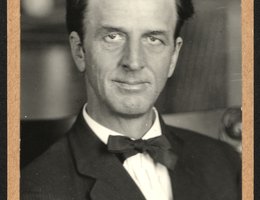
Portrait of John N. Norton
Nebraska State Historical Society
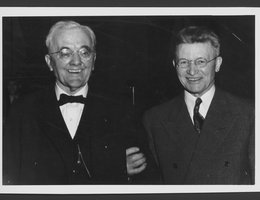
Senator George Norris (left) and Professor John P. Senning
Nebraska State Historical Society
Calls for Reform
For the United States, the 19th century was a period of rapid growth and change. Westward expansion more than doubled the country’s physical size, while the Technological Revolution industrialized the economy and concentrated populations in cities. The people’s needs and interests also changed with these transformations, and consequently, they began to demand that all levels of government adapt. Notably, during the 1800s wealth inequality and political corruption had spread alongside industrialization, leading Americans to call for government solutions to these economic and social problems.
The Progressive Movement of the early twentieth century (1900s) aimed to regulate wealthy industry leaders and reform government to better represent the interests of working people. This often meant a more democratic approach to government that encouraged citizens to both observe and participate. For example, the Progressive movement promoted direct involvement in lawmaking, allowing citizens to vote on potential laws through referendums and even to suggest new laws through voter initiatives.
In 1915, a committee in the Nebraska legislature led by John “Nate” Norton first proposed adopting a unicameral structure. One-house legislatures appealed to progressives in state governments throughout the country for two reasons: By removing half of the lawmaking process, unicameral legislatures could make government more efficient and less expensive. More importantly, they could make the lawmaking process more accessible and accountable to the public—a one-chamber legislature has fewer rules and procedures to understand, shorter and fewer proceedings to monitor, and fewer opportunities for legislators to pass the blame for poor lawmaking.
The Nebraska legislature declined Norton’s proposal. While this setback did not end Nebraska’s unicameral movement, reformers saw little success as the First World War and economic boom of the 1920s quieted demands for change. A second proposal at the 1919 constitutional convention failed on a tied vote, and in 1923, a citizen initiative failed to pass a constitutional amendment for a unicameral. In both 1925 and 1933, unicameral proposals in the legislature also fell short.
Despite repeated defeats, the unicameral movement became more vocal, in part due to Nebraska Senator George W. Norris. A Republican from Beaver City, Norris was a well-regarded progressive who believed government should be shaped in the image of a “great corporation,” with “the governor its president; the legislature, the board of directors; the people, the stockholders.” He became a key figure in the national unicameral movement in a 1923 interview with the New York Times in which he proposed unicameral legislatures as a solution to legislative inefficiency and corruption.
Read George Norris' case for the unicameral legislature in the New York Times
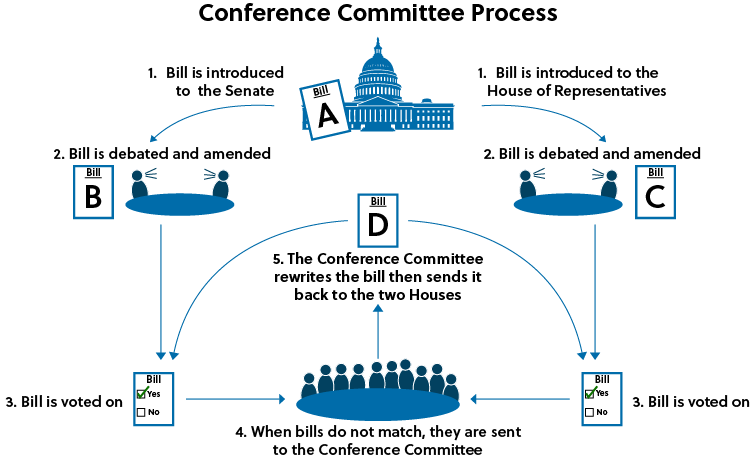
For Norris, the particular evil of bicameral legislatures was the conference committee, a special body that combines members of both houses to resolve differences between bills passed in each. Conference committees are only needed in bicameral legislatures because they subject bills to negotiation and amendment in two separate chambers, making it possible to pass two different versions of the same bill. Rarely used in today’s Congress, the changes that emerge from a conference committee can be significant and are not open to the same public oversight as the regular lawmaking process. It was in conference committee, Norris said, "that the ‘bosses’ and the special interests and the monopolies get in their secret work behind the scenes.”
Public interest in government reform renewed in the 1930s with the onset of the Great Depression. Poverty and unemployment had Americans seeking help and support from their elected representatives, and in 1932, Democrat Franklin D. Roosevelt won an overwhelming victory in the Presidential election promising a “New Deal” for the American people. Democrats also swept Nebraska’s elections, but the resulting legislature was inexperienced and unprepared to deal with the worsening national crisis, leading Nebraskans to seek more substantial reforms.
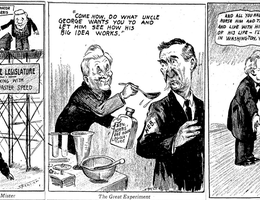
Political cartoons in the Omaha World Herald showed George Norris pushing the Unicameral on unenthusiastic Nebraskans
Cartoons by Guy Spencer | Omaha World Herald
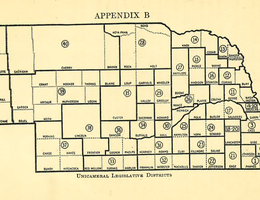
The Original Unicameral Legislative Districts
In The One House Legislature by John Senning
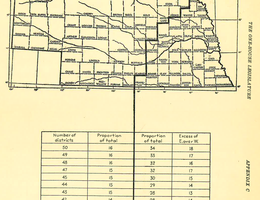
Relative Distribution of Representation between Eastern and Western Sections of Nebraska, 1935
In The One-House Legislature by John Senning
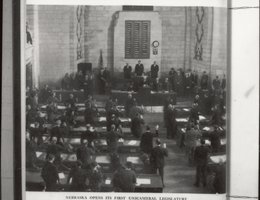
Nebraska Opens its First Unicameral Legislature, 1937
Nebraska State Historical Society
The Nebraska Experiment
In 1934, Norton and Norris, along with a group of University of Nebraska political scientists chaired by Dr. John P. Senning, formed a committee of Nebraskans called the Model Legislative Committee. Together they worked to craft an amendment to Nebraska’s constitution that would completely redesign the legislature. The amendment would remove Nebraska’s second house, creating a unicameral—it also introduced other reforms.
The new legislature would also be non-partisan, meaning political parties would play no formal role in its functions. Legislators would be elected as individuals, with no mention of their party affiliations on the ballot, and lawmaking procedures would not recognize formal party leadership. This change was controversial in the committee, as many feared that it would cause both political parties in the state to oppose the amendment. However, for George Norris, the point was non-negotiable. He believed that competition between political parties encouraged government corruption and inefficiency, and that removing them would appeal to Nebraskans.
The proposed amendment also attempted to make the Nebraska legislature smaller and more professional. The new Unicameral would only have between thirty and fifty members, less than half of the previous 133. While each legislator would represent a greater number of people, the committee believed that giving lawmakers larger and more diverse districts would give them better perspectives on the needs of the state, and that the smaller body would encourage more legislators to be active participants in lawmaking, rather than relying on a select few leaders.
A smaller legislature also meant being able to pay individual legislators more. In his autobiography, George Norris remembered declining to ever run for the Nebraska legislature because he could not afford to set aside his law practice for the measly wage offered to lawmakers, only $300 for a two-year term. He believed a more substantial salary would attract better lawmakers, and people from all walks of life, not just those who were already financially secure.
Once the committee completed the amendment, they began petitioning to place it on the ballot as an initiative, reasoning that legislators would not pass an amendment that might eliminate their jobs. To get on the ballot, the committee needed to gather 57,000 signatures across the state. Initially, Norris paid $1,000 of his own money to hire petitioners, but in a short time the campaign built an enthusiastic volunteer staff. The amendment gathered more than 95,000 signatures and was put to a vote of the people in 1934.
Nebraska Senator David Landis presents George Norris' argument for a unicameral legislature. From the 1995 NET production, The Fighting Liberal: A Portrait of Senator George Norris. Rebroadcast in Nebraska Stories in 2010.
The initiative faced an uphill battle to the November election. As expected, both of the state’s political parties opposed the amendment. Black Omahans, fearing a smaller legislature would eliminate their only representative, were also opposed. Most of the state’s press also came out in opposition. However, many Nebraskans campaigned in favor of the unicameral. The Nebraska Beacon, a progressive weekly newspaper, supported the reform, and the Lincoln Star also published editorials in favor of the Unicameral.
The amendment campaign also benefited from the influence of George Norris. By this point, he had already served more than 30 years in Congress. Having recently spearheaded several major New Deal reforms including the Tennessee Valley Authority Act, the Norris-LaGuardia Act, and the 20th Amendment to the United States constitution, Norris was immensely popular among Nebraskans. He was also passionate about the Unicameral and personally drove around the state speaking in support of the amendment.
While Norris, Norton, and Senning’s leadership guided the campaign, voter initiatives rely on the work of everyday people who volunteer time and effort to make democracy work. In his autobiography, George Norris made a point to credit Nebraskans, especially “thousands of young people who, not old enough yet to vote, nevertheless revealed deep interest and voluntarily made speeches in the campaign,” held debates “in nearly every town and city,” and “made door-to-door canvasses distributing literature.”
On Election Day, Nebraskans approved the amendment in a vote of more than 286,000 to 193,000, winning a majority in 84 of the state’s 93 counties. The legislative reforms passed alongside two other popular constitutional amendments, and while some suspected voters of uncritically supporting all three, the unicameral amendment passed by the highest margin of them all.
Nebraska’s final bicameral legislature, which convened in 1935, was charged with hammering out the details of the new Unicameral. The membership of the new legislature was set at 43, with each lawmaker representing one newly drawn district. Nebraska’s rural western regions, which feared being outvoted by legislators from the more populous East, successfully pushed for favorable districts that would help to protect their interests into the 1960s.
Each member of the Unicameral would be elected for two-year terms, though like the previous legislature, the Nebraska Unicameral convened only every other year. Legislators’ salaries increased to $872 per year.
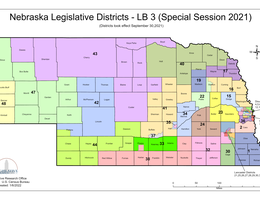
Map of Nebraska's Legislative Districts since 2021
Nebraska Unicameral Information Office
The Unicameral Through the Years
The first Nebraska Unicameral convened on January 5, 1937. John Norton, who left a seat in the U.S. House of Representatives to serve in the new legislature, chaired the first rules committee.
Though the success of Nebraska’s unicameral amendment sparked national enthusiasm and several initiatives in other states, none were successful. Nebraska’s remains the only unicameral, non-partisan state legislature (though the territories of Guam and the U.S. Virgin Islands have both adopted unicamerals), and has undergone remarkably few changes in nearly a century of lawmaking. However, just as the Unicameral itself was a response to the changing needs of a growing America, it too has evolved through changing times.
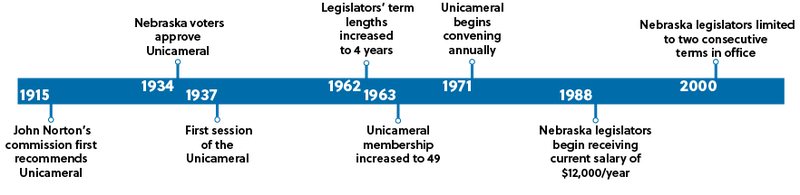
The length of Nebraskan legislators’ elected terms increased from two years to four in 1962. The following year, as the Civil Rights Movement pressured the U.S. Supreme Court to establish a principle of one-person, one-vote, Nebraska increased the legislature’s membership to 49 and redrew electoral districts so that they were equal in population, ending the imbalance that favored the rural West.
In 1971, the Legislature began meeting every year. In even-numbered years, legislators convene for 60 days beginning in January. In odd-numbered years, they continue regular lawmaking in addition to setting the state’s budget in 90-day sessions. Though rare, both the Legislature and the Governor can initiate special legislative sessions to deal with pressing issues. Nebraska lawmakers saw a pay increase to $12,000 a year in 1988. Their salary has not been raised since.
An initiative in the year 2000 limited Nebraska’s legislators to two consecutive terms in office, though they may run again after four years away. Voters will consider in November 2026 whether to increase the term limit to three terms—a measure which failed in 2012.
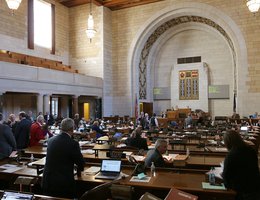
George W. Norris Legislative Chamber (in session)
Nebraska Unicameral Information Office
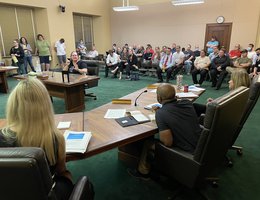
Nebraska State Senators Hear Testimony from Prison Employees
Photo by Bill Kelly | Nebraska Public Media
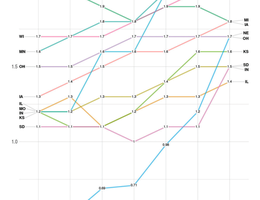
Two Decades of Polarization in American State Legislatures
in Two Decades of Polarization in American State Legislatures by Shor and McCarty
Nebraska’s Legislature Today
The Unicameral was established with the aim of making lawmaking more accessible and accountable to Nebraskans, a mission embodied in the inscription above the entrance to the Capitol Building:
THE SALVATION OF THE STATE IS WATCHFULNESS IN THE CITIZEN.
Nebraskans seem to believe that it is fulfilling its purpose. There have been few calls to return to a bicameral legislature, none with significant support, and a 2015 survey indicated that only 26% of Nebraskans disapproved of the legislature’s work.
A comprehensive national study of state legislatures in 1971 rated Nebraska’s as the most accountable in the country. While no such study has been repeated, the Unicameral continues to be exceptionally open. Nebraskans can voice opinions in public hearings for every bill proposed in the legislature and are given more notice to do so than citizens of any other state. Nebraska is also one of twenty-four states in which citizens can take part in lawmaking through both initiatives and referendums. The single house allows the press to more easily and effectively report to the public on legislative proceedings, and since 1971, legislative sessions have been broadcast live by Nebraska Public Media.
While Nebraskans are generally happy with their legislature, it is not free of criticism, especially concerning its non-partisan elements. The lack of party structure does prevent legislators from organizing along party lines, but they still work in coalitions built around partisan issues, like abortion or minimum wage, drawing accusations that the Unicameral is non-partisan in name only.
State legislatures across the country have become more polarized, or strongly divided along party lines, since the early 2000s, and while the Unicameral remains less polarized than some legislatures, it has polarized more rapidly than any other state’s. Some Nebraskans suggest that returning formal partisanship to the state legislature would not only make legislators' political beliefs more apparent to voters, but that party organization would decrease the influence of special interests and the Governor on lawmaking.
For all its merits and flaws, the Nebraska Unicameral is a progressive experiment in democracy and a reflection of Nebraskans’ unique commitment to working together for effective, accountable government.
Updated September 9, 2026
Glossary
democratic republic—a form of government in which power is held by the people who elect representatives to govern on their behalf
legislature—a government body responsible for the creation of laws
bicameral—a lawmaking body that is split into two separate separate assemblies of lawmakers, called houses or chambers, both of which play a role in lawmaking. The two houses of the United States legislature are the House of Representatives and the Senate.
checks and balances—a fundamental principle of government in the United States in which the different branches of government each have powers they can use to limit (or check) the power of the other branches, creating an overall balance of power between them
bill—a proposal for a law being considered by a legislature
federalism—a fundamental principle of government in the United States that splits power between one central (federal) government and the individual state governments.
unicameral—a lawmaking body made up of only one assembly of lawmakers
Progressive Movement—a social and political movement that emerged during the turn of the 20th century in the United States. This period of U.S. History between the 1890s and 1920s is often referred to as the Progressive Era. Progressives advocated reforms of government and society, especially to regulate industry and combat government corruption.
reform—to change for the better, improve by modifying
referendum—a process that allows legislatures to put proposed laws to a vote of the people
initiative—a process that allows the people to propose and approve new laws without the legislature
committee—a small group of lawmakers within a legislature tasked with crafting, debating, and amending bills, usually on a specific topic
amendment—a change or edition to a bill or law
conference committee—a special committee that exists in bicameral legislatures and is made up of members of both houses. When a bill is passed from one house, but then receives changes before being passed in the second, the conference committee resolves differences between the two versions of the bill.
Great Depression—a worldwide economic crisis that began in 1929 and continued throughout the 1930s. Americans experienced high unemployment, low wages, and business failure.
non-partisan—excluding political parties, as opposed to "partisan," meaning having to do with political parties
petition—broadly, a request or demand. In government, petitions are formal requests by groups of citizens for their elected representatives to take a desired action.
term—the amount of time for which a government official is elected to serve
coalition—a group of people working together to achieve a specific goal
political polarization—a process in which views of political parties share fewer views with opposing parties, views become more extreme and cooperation between parties decreases
term limits—a limit placed on the number of terms elected officials are allowed to hold office
Reflection Questions
- COMPARE AND CONTRAST: What are the benefits of a unicameral legislature compared to a bicameral? What are the downsides?
- CONTEXTUALIZATION: Why do you think the unicameral model has succeeded in Nebraska, but failed to catch on in other states?
- RELEVANCE: What reforms do you think would help today's governments better serve the people?
References
Berens, Charlyne. One House: The Unicameral’s Progressive Vision for Nebraska. University of Nebraska Press, 2014.
—. Nebraska’s Unicameral: Still Progressive after All These Years? Nebraska Research, 2019.
Hickey, Donald R., Susan A. Wunder, and John R. Wunder. Nebraska Moments. University of Nebraska Press, 2007.
Janousek, Christian L., Jerome Deichert, and Robert Blair. “The Unicameral Legislature: Uniquely Nebraska.” In Nebraska Government and Politics. University of Nebraska Press, 2025.
Masket, Seth, and Boris Shor. “Polarization without Parties: Term Limits and Legislative Partisanship in Nebraska’s Unicameral Legislature.” State Politics & Policy Quarterly 15, no. 1 (2015).
Myers, Adam S. “The Failed Diffusion of the Unicameral State Legislature, 1934-1944.” Studies in American Political Development, no. 32 (2018): 217–35.
Naugle, Ronald C., John J. Montag, and James C. Olson. History of Nebraska. University of Nebraska Press, 2014.
Norris, George W. Fighting Liberal: The Autobiography of George W. Norris. Macmillan, 1945.
Pace, Brad, dir. The Fighting Liberal. Nebraska Public Media, 1995.
Senning, John Peter. The One-House Legislature. McGraw-Hill, 1937.
About the author: Shane Adams is a K-12 Education Specialist at Nebraska Public Media and former high-school history teacher. He holds a M.A. in History and M.S. in Secondary Education from the University of Nebraska at Omaha.