


Beef Goes Modern
Lesson Plan: 1925-1949: Beef Goes Modern - Grade Level [8]
Introduction
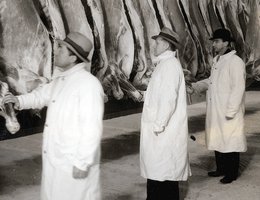
By 1925, beef production had been greatly improved. New laws were enforced that reduced ranchers’ illegal use of public land. Stockyards and packing houses began to follow health guidelines and had somewhat improved working conditions for their workers.
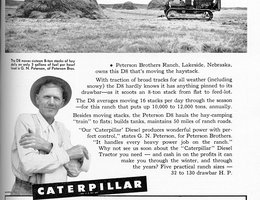
Advertisement excerpt: Moving a hay stack with a D-8 Caterpillar on the Peterson Brothers Ranch near Lakeside, Nebraska, 1949
Courtesy The Nebraska Cattleman
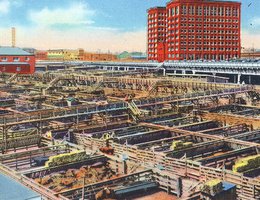
In 1926, a new Livestock Exchange Building towered over the South Omaha stockyards. It reflected the strength of the cattle and the livestock industry over nearly a quarter century, and it promoted hope for the future.
Everywhere you looked, life was becoming more modern. Machines were changing agriculture all across Nebraska. Gasoline-powered engines caused some of the biggest changes. With a tractor, a farmer could raise and deliver more corn. This caused growth in feedlots around the state.
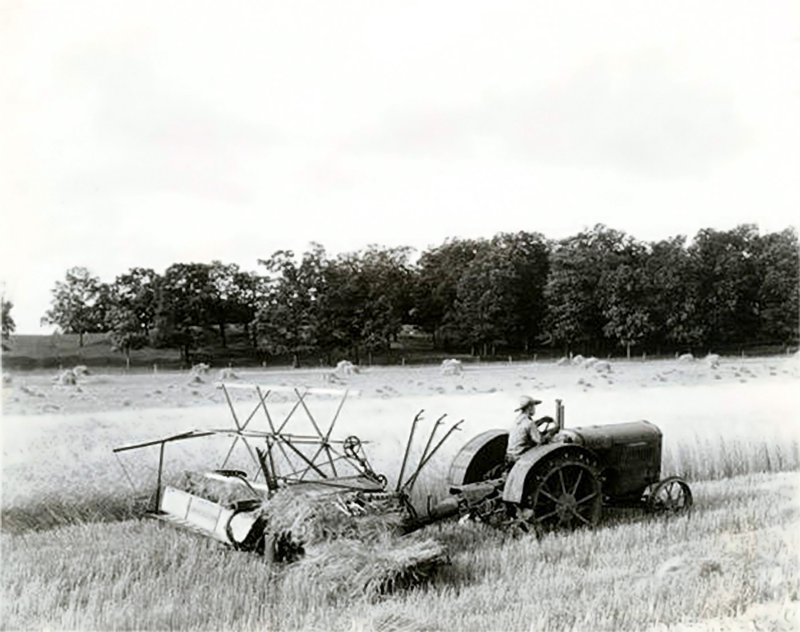
Cars, trucks, and light tractors combined with a growing system of roads and highways. This helped ranchers increase the amount of hay that they could produce. Trucks slowly began to compete with the railroads as the way to ship livestock to South Omaha. In South Omaha, the stockyards continued to grow, eventually covering over 200 acres.
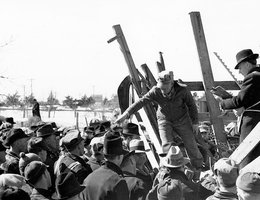
Auctioning Farm Equipment on the Zimmerman Farm near Hastings, Nebraska, March 1940
Courtesy History Nebraska, RG2608-1265
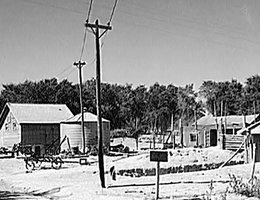
Electricity added to rural areas in the 1930s
Courtesy Farm Security Administration, Library of Congress, LC-USF34-059557-D Mitchell_8c16374r
Cattle on a Roller Coaster
Then, in late 1929, everything caved in. Prices for livestock and grain dropped to record lows. And the rains stopped. Banks closed, and loans that farmers had taken out to increase their acres came due. Nebraska agriculture was in turmoil.
Aid from the federal government improved things, such as providing electricity to rural areas and highway construction. World War II created both a demand for beef and technologies that would allow the cattle industry to grow.
After the War, diesel technology added more muscle to tractors, and with larger trucks, ranchers depended even less on the railroads. Antibiotics, fertilizers, and herbicides improved corn production and led to larger and larger feeding operations.